
The book Negative Theology in Imami Theological Schools has been published
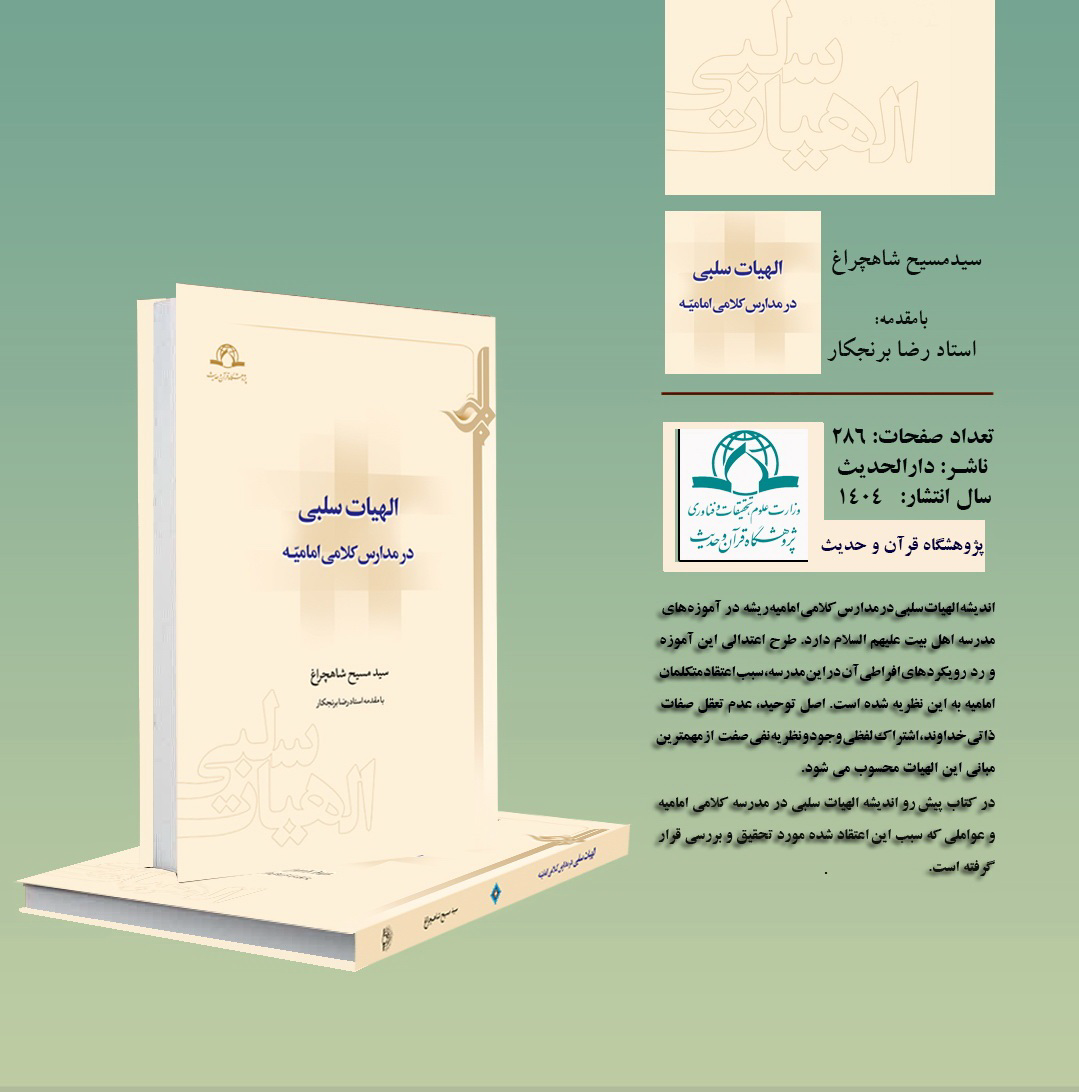
The Book Negative Theology in Imami Theological Schools Published
The book Negative Theology in Imami Theological Schools, authored by Dr. Seyyed Masih Shahcheragh and published by the Research Institute of Quran and Hadith, has now been released.
According to the Public Relations Office of the Research Institute of Quran and Hadith, the concept of negative theology within Imami theological schools is rooted in the teachings of the Ahl al-Bayt (a). The balanced articulation of this doctrine and the rejection of its extreme forms within this tradition led Imami theologians to adopt this theory. The principle of monotheism, the unknowability of God’s essential attributes, equivocality of existence, and the theory of negating attributes are considered among the most fundamental foundations of this theological approach.
This book is the first independent work dedicated to the subject of negative theology in Imami kalam. It examines the development of negative theology within Imami theological schools and investigates the factors that shaped this doctrinal inclination.
The study traces the orientation of Imami theologians—beginning from the earliest periods of Shi‘i history—regarding the semantic understanding of divine attributes. It seeks to answer how widely negative theology was accepted among Imami theologians and what developments this idea underwent across different theological schools.
This work is one of the earliest studies to explore the position of negative theology within Imami thought. It emphasizes that this topic still requires further research to uncover its hidden dimensions in the intellectual heritage of Imami scholars throughout history.
With careful analysis, the author examines the views of Imami theologians, school by school and in historical sequence, evaluating their arguments in light of their principles and methodological foundations. The findings show, first, that negative theology was a prevalent theory among Imami theologians; and second, that the evolution of their views and the reasoning they offered for negative theology can be clearly traced.
The book consists of seven chapters. The chapter on the Kufan theological school draws on the traditions of the Ahl al-Bayt (a) and the opinions of their students. It begins with a report on the views of the disciples of the Imams, based on heresiographical and biographical sources. It then examines the traditions of the Ahl al-Bayt (a), which represent the most important source for uncovering the positions of theologians within this school. The main focus here is on identifying the components of negative theology in the teachings of the Infallibles.
The chapter on the Qom theological school reviews negative theology and the developments it underwent there. Key figures of this school—such as al-Kulaynī and Shaykh Ṣadūq—receive special attention.
The chapter on the Baghdad theological school analyzes the theory within the Baghdad and Rayy schools. Since, according to researchers, the Rayy school is a continuation of the Baghdad school, both are studied together.
The final chapter discusses the foundational principles that guided Imami theologians toward adopting negative theology in their understanding of God’s essential attributes.
Based on this framework, the present study is organized into seven chapters:
-
Negative Theology in the Kufan Theological School
-
Negative Theology in the Qom Theological School
-
Negative Theology in the Baghdad Theological School
-
Negative Theology in the Hillah Theological School
-
Negative Theology in the Isfahan Theological School
-
Negative Theology in the Khorasan Theological School
-
Foundations of Negative Theology
The book Negative Theology in Imami Theological Schools, authored by Dr. Seyyed Masih Shahcheragh with a preface by Hujjat al-Islam Dr. Reza Berenjkar, has been published in Persian in 286 pages, octavo size, in the year 1404 (2025), in collaboration with Dar al-Hadith Publications.
Follow the latest news and updates of the Research Institute of Quran and Hadith on the Eitaa messaging platform.